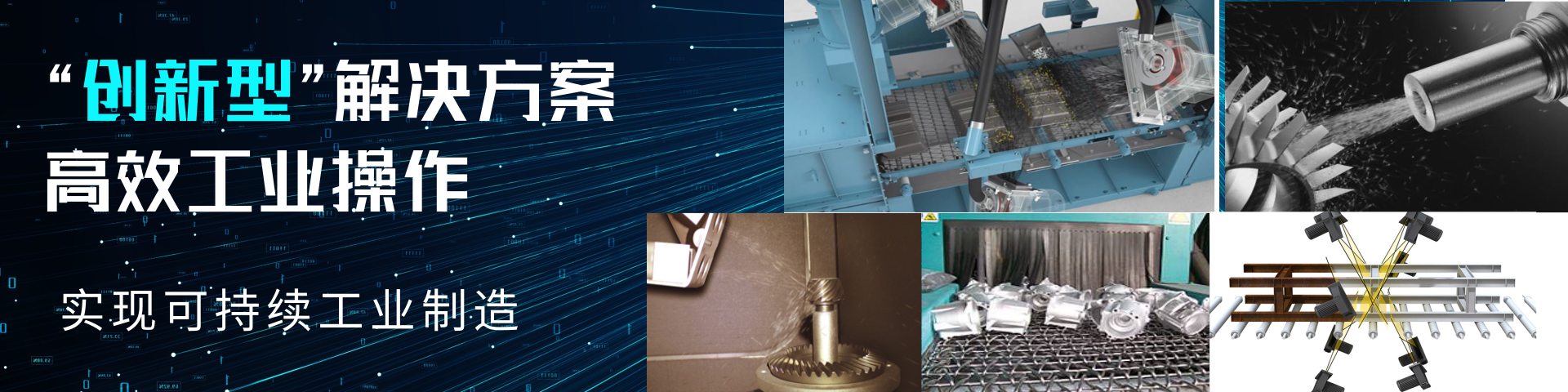
Comprehensive Analysis of Shot Blasting Machines: Working Principles, Applications, and Purchasing Guide
In the field of modern industrial manufacturing and surface treatment, the shot blasting machine, as an efficient and environmentally friendly cleaning and strengthening equipment, has become an indispensable core tool. Whether it is extending the fatigue life of automotive components or performing anti-corrosion pretreatment on bridge steel structures, the shot blasting machine plays a vital role. This article provides an in-depth technical analysis and practical guide from dimensions such as working principles, core applications, selection key points, and future trends.
1. Basic Overview and Working Principle of Shot Blasting Machines
1.1 What is a Shot Blasting Machine: Definition and Core Functions
A shot blasting machine is a surface treatment device that uses a high-speed rotating impeller to propel abrasive media (such as steel shots or steel grit) at a certain angle and speed onto the workpiece surface, achieving purposes such as cleaning, rust removal, strengthening, or finishing. Its core functions include removing attachments like oxide scale, rust, burrs, and molding sand from the workpiece surface, while simultaneously inducing compressive stress on the surface through the impact of the abrasive, significantly enhancing its fatigue resistance.
1.2 Working Principle of Shot Blasting Machines: Blasting Wheel, Abrasive Circulation System, and Dust Collector
The workflow of a shot blasting machine can be summarized into three main stages: "blasting, circulation, and dust collection":
- Blasting Wheel: As the core execution component, the high-speed rotating impeller accelerates the abrasive to 70-100 m/s, directing it onto the workpiece surface. Its blades, control cage, and impeller are wear parts that directly affect processing efficiency and energy consumption.
- Abrasive Circulation System: Composed of an elevator, separator, and screw conveyor. After impacting the workpiece, the abrasive falls to the bottom, is transported by the elevator to the separator, where broken abrasive and dust are separated via air or magnetic separation. Qualified abrasive is then returned to the blasting wheel for reuse.
- Dust Collector: Typically uses pulse-jet cartridge or baghouse dust collectors to ensure dust concentration in the working environment meets standards, enabling green production.
1.3 Main Types of Shot Blasting Machines: Tumble Belt, Hook, Through-Feed, and Table Type
- Tumble Belt Shot Blasting Machine: Suitable for small, impact-resistant batch workpieces (e.g., castings, forgings). Workpieces receive 360-degree blasting while tumbling in the belt, offering high efficiency.
- Hook Type Shot Blasting Machine: Ideal for larger, heavier, or complex-shaped workpieces (e.g., gears, housings). Workpieces are suspended by a hook and enter the blasting chamber for single or batch processing.
- Through-Feed Shot Blasting Machine: Primarily for long workpieces like steel plates, profiles, and H-beams. Uses roller conveyors to continuously pass workpieces through the blasting zone, widely used in steel structure pretreatment lines.
- Table Type Shot Blasting Machine: Workpieces are fixed on a rotating table, suitable for precision castings, thin-walled parts, or components requiring directional blasting to avoid deformation or damage.
2. Core Application Areas and Industry Value of Shot Blasting Machines
2.1 Metal Surface Treatment: Rust Removal, Descaling, and Strengthening
In the steel manufacturing and metal processing industry, shot blasting machines are the preferred equipment for rust removal and descaling. After shot blasting, the surface cleanliness can reach Sa2.5 to Sa3 levels, while forming a uniform roughness (Ra 12.5 to 25 μm), significantly improving the adhesion of subsequent coatings, platings, or bonds. Additionally, shot peening technology introduces residual compressive stress, which can substantially extend the fatigue life of critical components like springs, gears, and connecting rods.
2.2 Casting and Forging Cleaning: Removing Burrs and Molding Sand
During casting and forging processes, workpieces often have residual molding sand, oxide scale, and flash burrs. The high-frequency impact of a shot blasting machine efficiently removes these attachments without damaging the workpiece base. For precision castings, adjusting abrasive size and blasting angle achieves a "clean without damage" process effect.
2.3 Automotive and Aerospace: Component Shot Peening and Fatigue Life Enhancement
In the automotive industry, shot blasting machines treat critical safety parts like engine connecting rods, steering knuckles, and suspension springs. In aerospace, shot peening is widely applied to aircraft landing gear, turbine disks, and wing structural components. Research shows that proper shot peening can increase the fatigue life of aluminum alloy parts by 5 to 10 times, making it an indispensable technical method for lightweighting and high reliability.
2.4 Construction and Bridges: Steel Structure Anti-Corrosion Pretreatment
Large steel structures (e.g., bridges, stadiums, offshore platforms) must undergo shot blasting for rust removal before coating. Using through-feed shot blasting machines, comprehensive cleaning of H-beams, I-beams, and plates can be completed in one pass, with efficiency far exceeding manual sandblasting. The coating life of shot-blasted steel structures can be extended by 3 to 5 years, significantly reducing lifecycle maintenance costs.
3. How to Choose a Shot Blasting Machine Based on Needs: Key Parameters and Considerations
3.1 Workpiece Size and Shape: Matching Equipment Type and Chamber Size
The external dimensions of the workpiece are the primary factor in selection. For profiles or plates longer than 6 meters, a through-feed shot blasting machine should be prioritized. For large castings weighing over 1 ton, a hook type shot blasting machine is more suitable. Small batch parts are best handled by tumble belt or table type machines. Ensure the effective working space of the blasting chamber is at least 1.2 times the maximum workpiece contour size.
3.2 Processing Efficiency and Capacity: Number of Blasting Wheels, Power, and Abrasive Flow Rate
Capacity requirements directly influence the configuration of blasting wheels. A single blasting wheel typically has a power of 11 to 22 kW and an abrasive flow rate of about 200 to 500 kg/min. For high-demand continuous production lines (e.g., processing 30 tons of steel plates per hour), 4 to 8 blasting wheels should be configured, along with high-power elevators and separators. It is recommended to reserve a 10% to 20% margin based on target output to handle peak loads.
3.3 Abrasive Type and Size: Choosing Steel Shots, Steel Grit, Stainless Steel Shots, and Glass Beads
- Steel Shots: High hardness, long life, suitable for rust removal and strengthening, common sizes S230 to S550.
- Steel Grit: Angular shape, higher cleaning efficiency, suitable for removing thick oxide scale or burrs.
- Stainless Steel Shots: Used for stainless steel or aluminum surfaces to avoid rust contamination and maintain the original surface.
- Glass Beads: Used for finishing and deburring precision parts, with gentle impact, suitable for post-processing of 3D printed parts.
3.4 Environmental Protection and Energy Consumption: Dust Collector Efficiency and Energy Efficiency Ratio
Modern shot blasting machines must be equipped with efficient dust collection systems. It is recommended to choose a pulse-jet cartridge dust collector with a filtration accuracy of ≤1 μm and an emission concentration of ≤10 mg/m³. Also, consider the overall energy efficiency ratio (kWh/ton of workpiece). High-efficiency equipment using variable frequency drives and intelligent control can save 15% to 30% energy compared to traditional models.
4. Daily Maintenance and Common Troubleshooting of Shot Blasting Machines
4.1 Inspection and Replacement of Wear Parts: Blasting Wheel Blades, Control Cage, and Liner Plates
Blasting wheel blades wear the fastest and should be inspected every 200 to 500 hours. Replace immediately when blade thickness is reduced to 50% of the original, otherwise, uneven blasting will occur. Wear on the control cage and impeller also affects the blasting angle; monthly inspection is recommended. Liner plates (wear-resistant liners) should be checked quarterly and replaced if perforated or thinned by more than 60%.
4.2 Abrasive Circulation System Maintenance: Separator and Elevator Care
The air separation efficiency of the separator directly affects abrasive quality. Check the separator screen for blockages weekly and clean iron filings from the magnetic drum. The elevator belt should be checked monthly for tension and misalignment to prevent abrasive leakage. Regularly lubricate the bearings of the screw conveyor to avoid downtime due to foreign object jamming.
4.3 Common Faults and Solutions: Uneven Blasting, Excessive Noise, Poor Dust Collection
- Uneven Blasting: Check if blade wear on the blasting wheel is consistent and if the control cage angle is misaligned; calibrate the blasting direction if necessary.
- Excessive Noise: Usually caused by damaged liner plates or abrasive impacting the chamber walls; replace worn liners promptly and check if the abrasive flow rate is too high.
- Poor Dust Collection: Check if the cartridges are clogged, if the pulse-jet pressure is normal (needs to be ≥0.6 MPa), and clean accumulated dust from the hopper.
5. Industry Trends and Future Development Directions of Shot Blasting Machines
5.1 Automation and Intelligence: PLC Control and Robotic Loading/Unloading
High-end shot blasting machines now fully integrate PLC programmable controllers and touchscreen HMIs, enabling real-time monitoring of parameters like blasting current, abrasive flow rate, and dust collector differential pressure, with automatic process adjustment. Combined with robotic loading/unloading and AGV transport, unmanned operation at the "dark factory" level is achievable, significantly reducing labor costs.
5.2 Green Manufacturing: Low Noise, Zero Emissions, and Abrasive Recovery Technology
New-generation shot blasting machines reduce noise to ≤85 dB(A) through optimized blasting wheel structure and soundproofing design. Using fully enclosed circulation systems and high-efficiency filtration technology achieves zero dust emissions. Abrasive recovery rates can exceed 99%, reducing solid waste generation and meeting ESG (Environmental, Social, Governance) requirements.
5.3 Emerging Applications: Post-Processing of 3D Printed Parts and Composite Surface Modification
With the rise of additive manufacturing (3D printing), shot blasting machines are used to remove support structure residues and unmelted powder from metal printed parts, while eliminating thermal stress through shot peening. In the composite field, low-pressure blasting with glass beads improves the wettability of carbon fiber or fiberglass surfaces, enhancing coating adhesion, providing new process solutions for aerospace and new energy sectors.
In summary, shot blasting machines have evolved from simple cleaning equipment into high-end tools integrating strengthening, modification, and green features. Whether for upgrading traditional manufacturing or achieving process breakthroughs in emerging industries, mastering the core technology selection and maintenance knowledge of shot blasting machines will provide solid support for quality improvement and cost reduction in enterprises.